Paint Correction
How to Remove Water Spots From Car Paint
Not all water spots are the same. How to identify mineral deposits versus etching, and the right way to remove each without damaging your paint.
Water spots are one of the most common complaints we hear, and one of the most misunderstood. The right fix depends on which type of spot you have.
Type 1: mineral deposits
When hard water evaporates, it leaves calcium and magnesium deposits sitting on the surface. They look like chalky rings and can often be felt with a fingertip. These are the easiest to remove.
Start with a normal wash. If the spots remain, use a dedicated water spot remover, which is a mild acid that dissolves minerals. Work one small section at a time, in the shade, on cool paint, and neutralize and rinse thoroughly afterward. Never let the product dry on the surface.
Type 2: bonded spots
If minerals sit on the paint for a long time, especially in heat, they bond more tightly. A water spot remover with a slightly longer dwell, or a clay treatment, usually handles these.
Type 3: etching
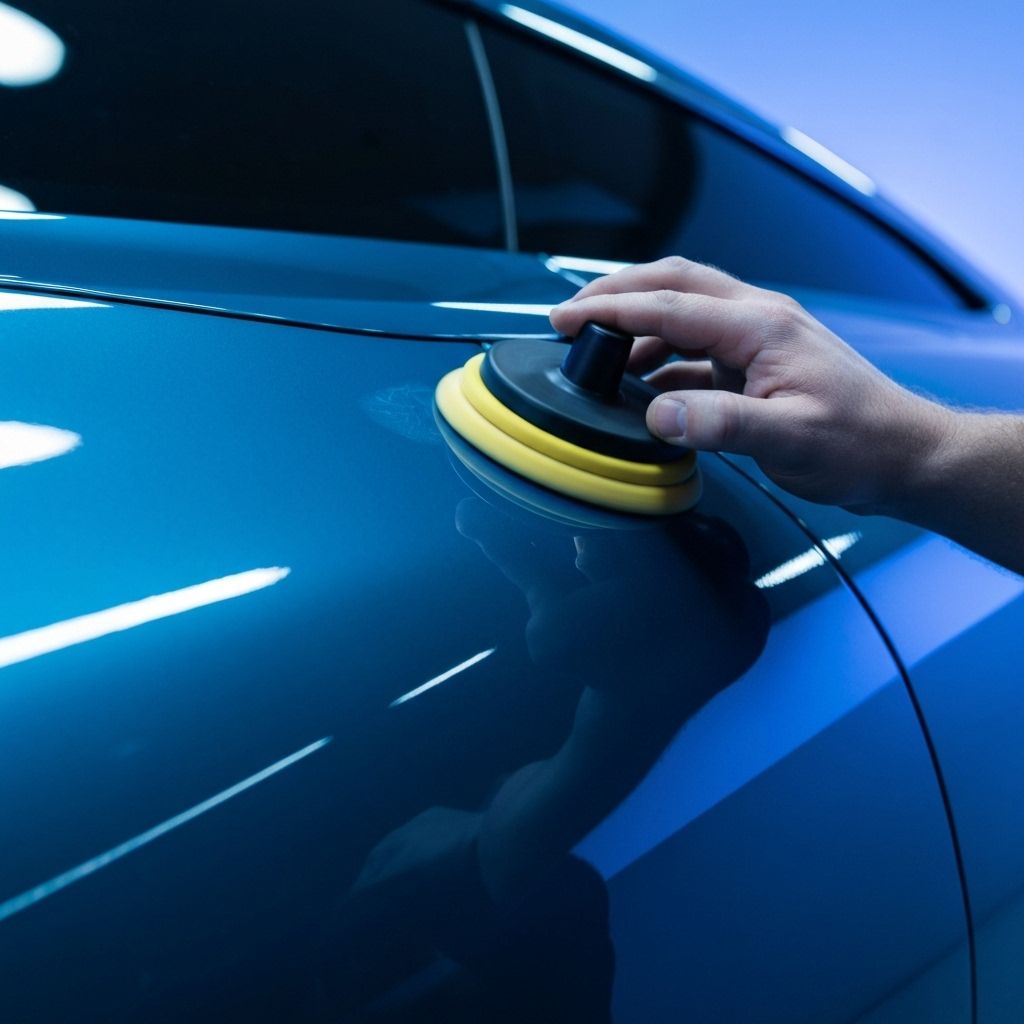
When minerals and sun stay on the paint long enough, they can etch into the clear coat, leaving a ring-shaped depression. You can see the outline even after the minerals are gone, and no chemical will fix it because the paint itself is damaged. Etching requires machine polishing to level the clear coat around the spot.
How to tell which you have
Wash and dry the car, then apply water spot remover to a test area. If the spots disappear, they were deposits. If a faint outline remains, that is etching.
Glass is affected too
Water spots on glass are often worse than on paint because glass is never protected. A dedicated glass water spot remover or a glass polish handles them. Badly etched glass may need professional polishing.
Preventing them
Dry the car promptly after washing, avoid sprinkler overspray, and keep the paint protected. Coated paint resists spotting better and makes deposits easier to remove before they etch.