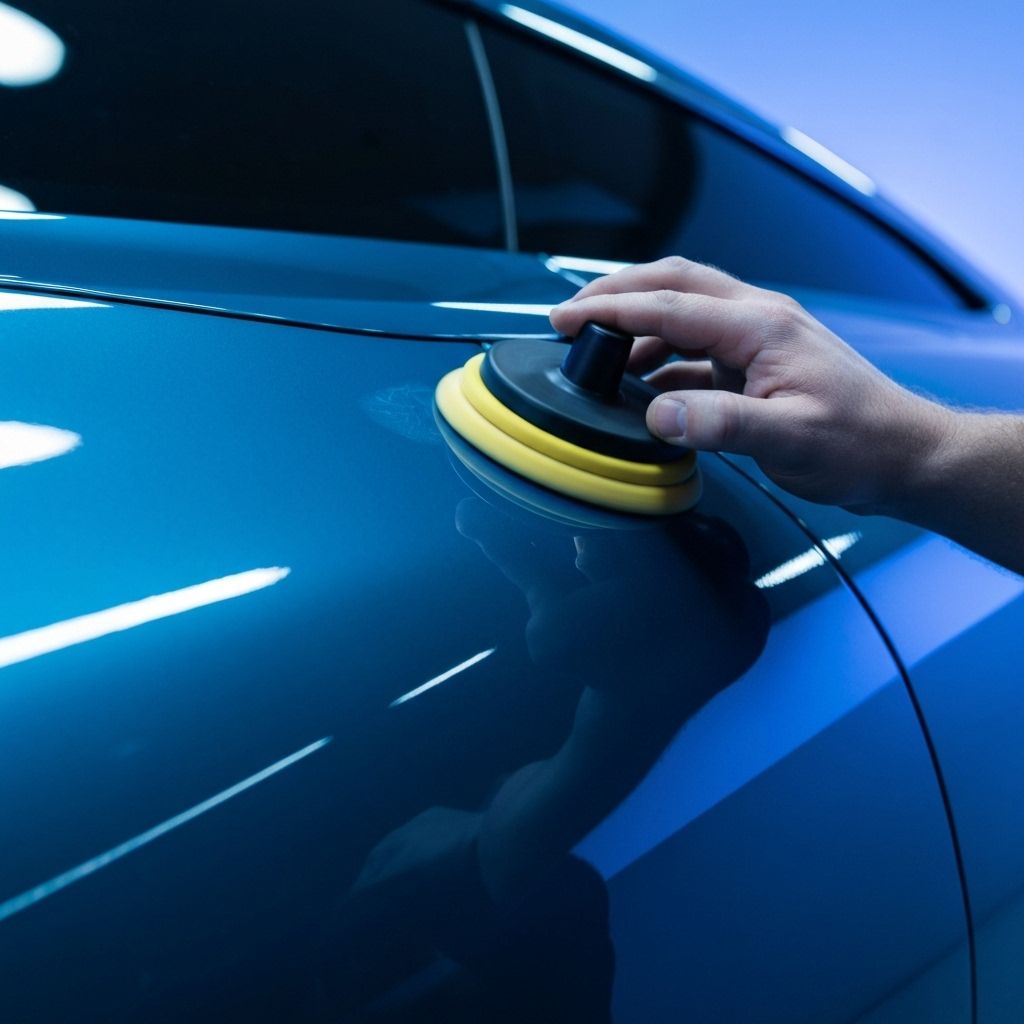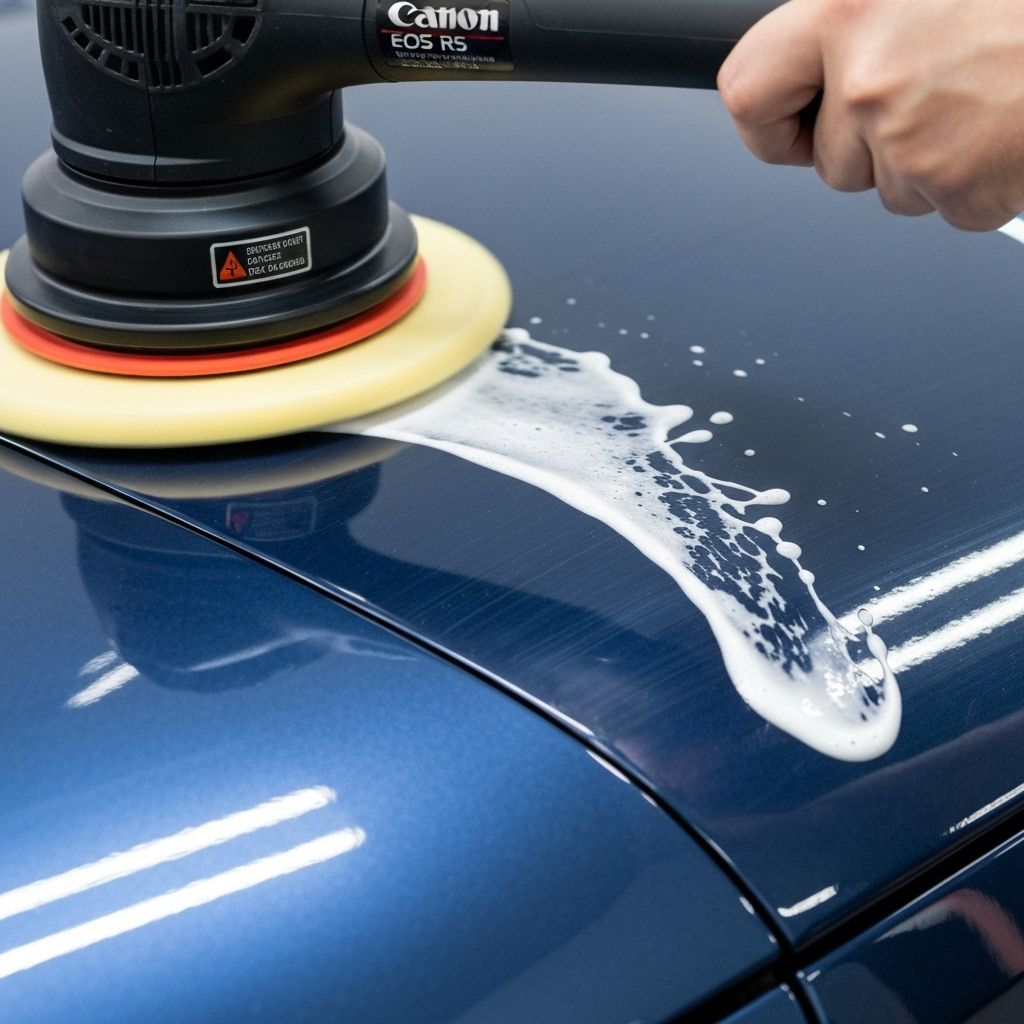
Paint Correction
Car Polish vs. Compound: What's the Difference?
Compounds cut, polishes refine. How abrasives work, when each is used, and why the gentlest product that works is always the right one.
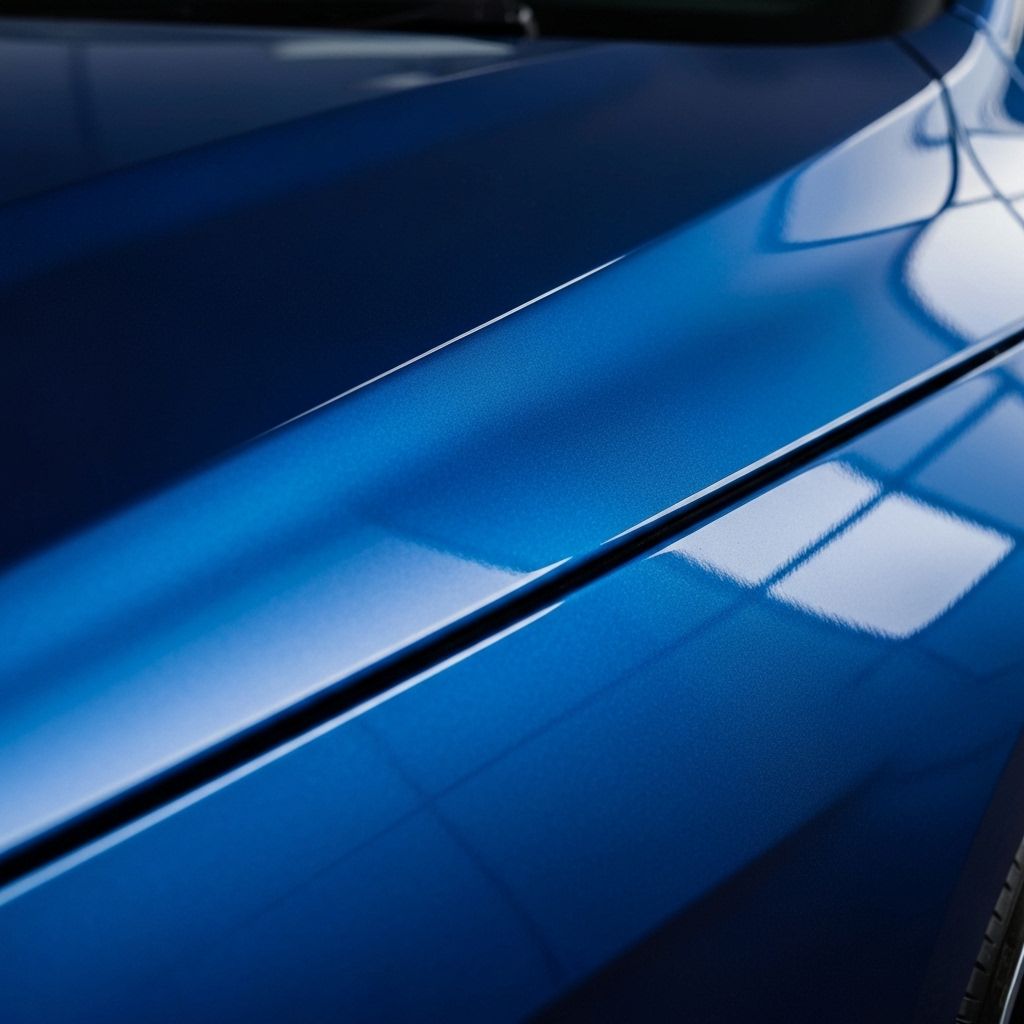
Compounds and polishes are both abrasive liquids used to remove defects from paint. The difference is how aggressive they are and what they are used for.
How abrasives work
Both products contain tiny abrasive particles suspended in a lubricating liquid. As the pad moves, the abrasives shave off a microscopic layer of clear coat, leveling the surface down to the bottom of the scratches. Many modern abrasives are designed to break down as they work, starting coarse and finishing finer.
Compound: for cutting
A compound has larger or harder abrasives and removes material quickly. It is used for deeper swirls, scratches, oxidation, water spot etching and sanding marks. Because it cuts aggressively, it often leaves a slight haze or micro-marring behind, especially on soft or dark paint.
Polish: for refining
A polish has finer abrasives. It removes light swirls and the haze left by compounding, and it maximizes clarity and gloss. On paint that is already in decent condition, a polish alone may be all that is needed.
One-step products
Some products are designed to cut reasonably well and still finish clearly on a single pass. These are popular for enhancement details, where the goal is a big visual improvement in a limited time rather than removing every defect.
Glaze is different
A glaze is not abrasive in the same way. It fills and hides fine swirls temporarily with oils and fillers. It can look great for a show, but the defects return after a few washes.
Choosing the right one
The rule is always to use the least aggressive product and pad that achieves the goal. Clear coat is thin, often thinner than a sheet of paper, and every correction step removes some of it. A test spot tells you whether a polish is enough or a compound is needed.
If you are not sure how much correction your car needs, a professional inspection under good light will tell you, and protect your clear coat in the process.